
Introduction
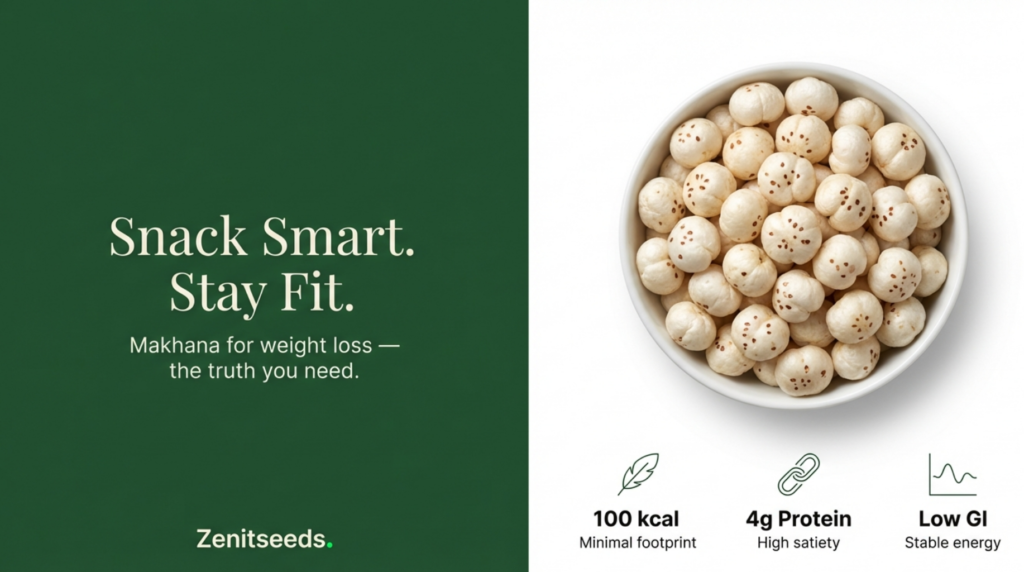
Makhana Helps in Weight Loss in India is hard. Not because people don’t try. But because snacking is woven into our daily fabric in a way that’s almost impossible to avoid. There’s chai at 11 am, something crunchy at 4 pm, and then whatever happens at 9 pm when dinner feels far away and the kitchen feels close.
Most diets fall apart not at mealtimes but between them. And most advice around this is either impractical — “just don’t snack” — or depressing — “eat a carrot.”
Here’s a more honest answer. The problem isn’t snacking. It’s what you’re snacking on. And makhana for weight loss is genuinely one of the smartest swaps you can make — not because it tastes like diet food, but because it doesn’t.
This post breaks down exactly why, how much to eat, when to eat it, and what the science actually says. No fluff, no false promises. Just practical information that can actually change your daily routine.
[Internal link suggestion: Explore our full plain and flavored makhana range — link to Zenitseeds product page]
Why Snacking Is Where Most Diets Break Down
Picture a typical weekday. Breakfast is reasonable. Lunch is planned. Dinner is controlled. But what happens in the four or five hours between each of those meals is where the calories quietly pile up.
A small packet of chips here. A couple of biscuits with chai there. A handful of namkeen while scrolling. None of it feels like a meal. All of it adds up fast.
Research consistently shows that unplanned snacking is one of the primary reasons people struggle to maintain a calorie deficit. Not because they overeat at meals, but because snacks are impulsive, under-tracked, and rarely chosen with intention.
The solution isn’t willpower. It’s having something better in the house to reach for.
What Makes Makhana Good for Weight Loss
It’s genuinely low in calories
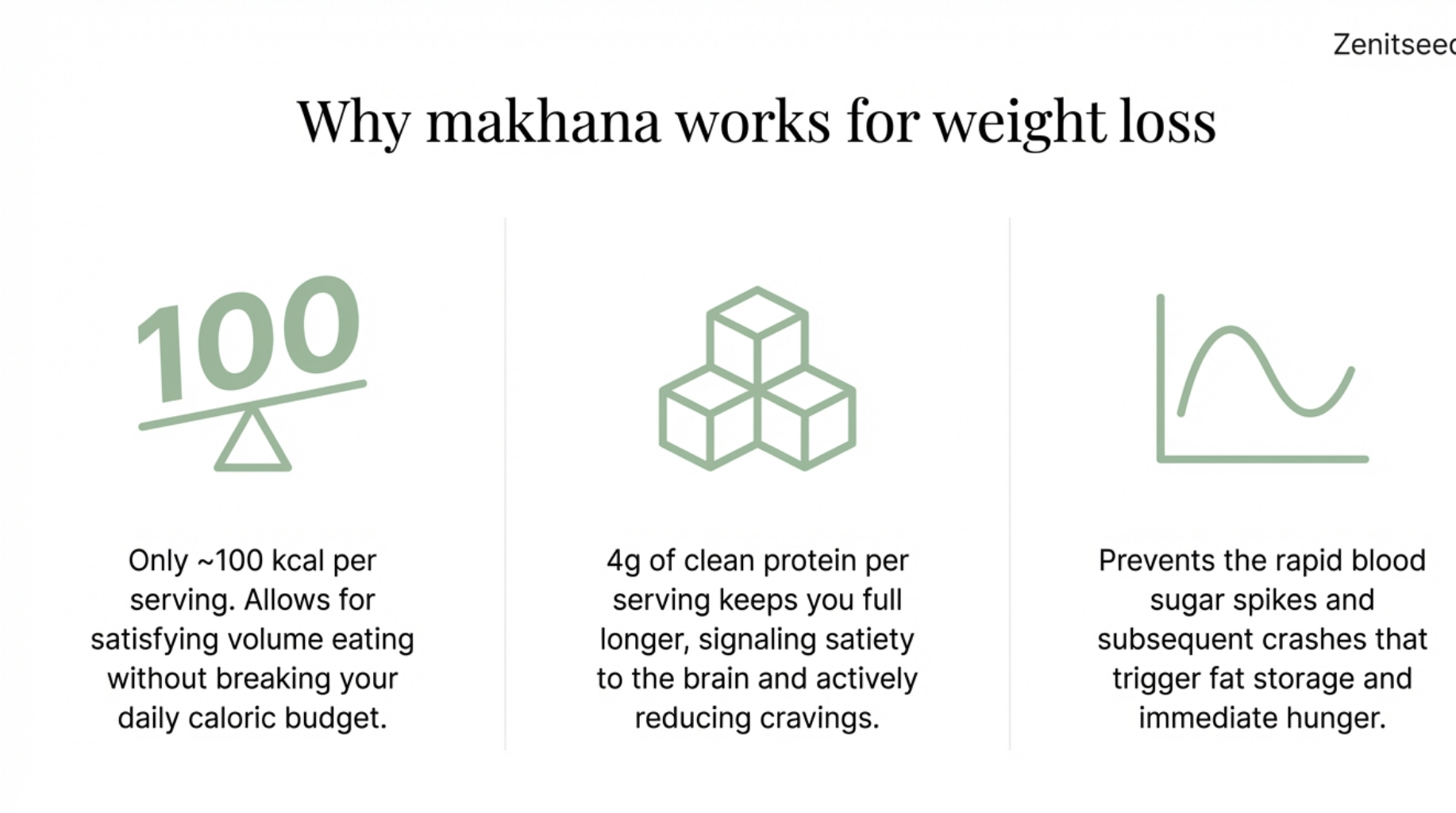
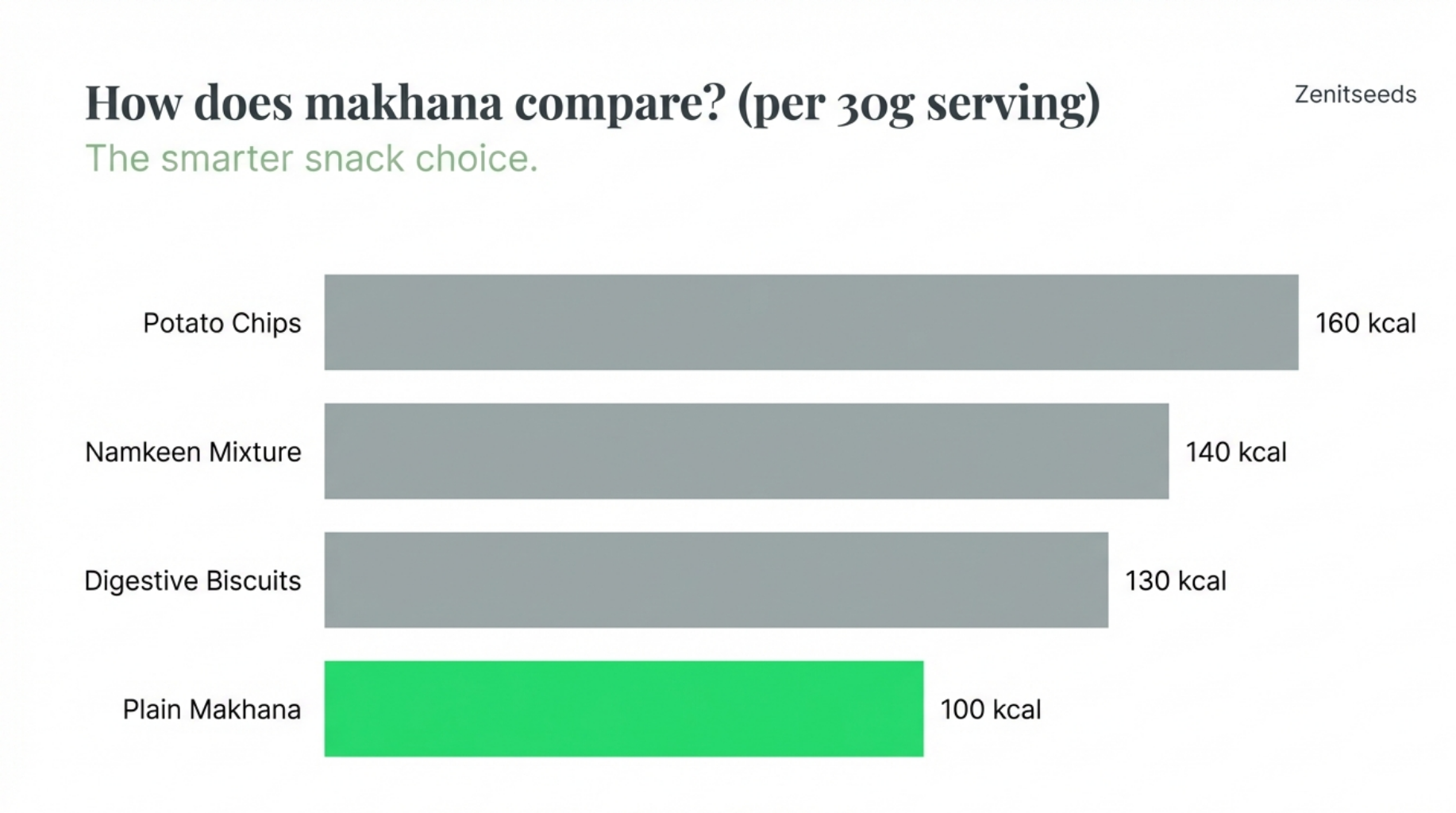
A 30-gram serving of plain makhana — roughly a small bowl — comes in at around 100 to 105 calories. That’s significantly lower than almost every popular Indian snack alternative.
For context:
- Potato chips (30g): ~160 calories
- Namkeen mixture (30g): ~140 calories
- Digestive biscuits (30g): ~130 calories
- Plain makhana (30g): ~100 calories
The difference adds up meaningfully over a week. Replacing one daily packet of chips with makhana saves you roughly 400 calories a week without any other change to your routine.
The protein actually keeps you full
This is the part most people don’t know. Makhana contains around 4 grams of protein per 30-gram serving. That might not sound like much in isolation, but combined with its low calorie count, the protein-to-calorie ratio is genuinely impressive for a snack food.
Protein slows digestion. It keeps blood sugar stable. And it signals fullness to your brain more effectively than carbohydrates or fats do. This is why makhana tends to satisfy hunger in a way that chips simply don’t — you eat chips and want more chips. You eat makhana and actually feel done.
The fiber helps too
Makhana contains a steady, moderate amount of dietary fiber. Fiber adds bulk without adding calories, slows the absorption of sugar into the bloodstream, and feeds the good bacteria in your gut. For weight management, fiber is one of the most underrated tools available — and makhana delivers it in a convenient, snackable form.
It has a low glycemic index
The glycemic index measures how quickly a food raises blood sugar. High-GI foods spike blood sugar fast, trigger insulin release, and leave you hungrier sooner. Low-GI foods do the opposite. Makhana has a low glycemic index, which means it provides sustained energy without the spike-and-crash cycle that drives impulsive snacking.
[Internal link suggestion: Read our deep-dive on makhana nutrition — link to plain makhana blog post]
How Makhana Helps in Weight Loss
Knowing makhana is good for you is one thing. Knowing how to actually use it well is another. Here’s what works.
Stick to the right portion
One serving is 25 to 30 grams — roughly a cupped handful or a small katori. This portion gives you around 100 calories, 4 grams of protein, and enough fiber to take the edge off hunger without eating into your calorie budget significantly.
It’s easy to over-eat makhana because it’s so light and airy. Use a small bowl rather than eating straight from the pack. This one habit alone helps with portion awareness across all snacks.
Time it around hunger windows
The most effective time to eat makhana for weight loss is during your natural hunger peaks — the windows where you’d otherwise reach for something less intentional. For most people this is mid-morning around 11 am, and mid-afternoon between 3 and 5 pm.
Eating makhana during these windows reduces how hungry you arrive at your next meal, which naturally leads to eating less without consciously trying to restrict.
Pair it smartly
Makhana on its own is great. Paired with a hot beverage or something with a little fat — a small handful of walnuts, for example — it’s even more satisfying. The combination of protein from makhana and healthy fat from nuts creates a snack that genuinely holds you for two to three hours.
Don’t skip meals and replace them with makhana
This is important. Makhana is a snack, not a meal replacement. Using it to skip meals creates a calorie deficit that’s too aggressive, slows your metabolism, and leads to overeating later. Eat your meals. Use makhana to manage the spaces between them.
Makhana vs Other Weight Loss Snacks India Has to Offer
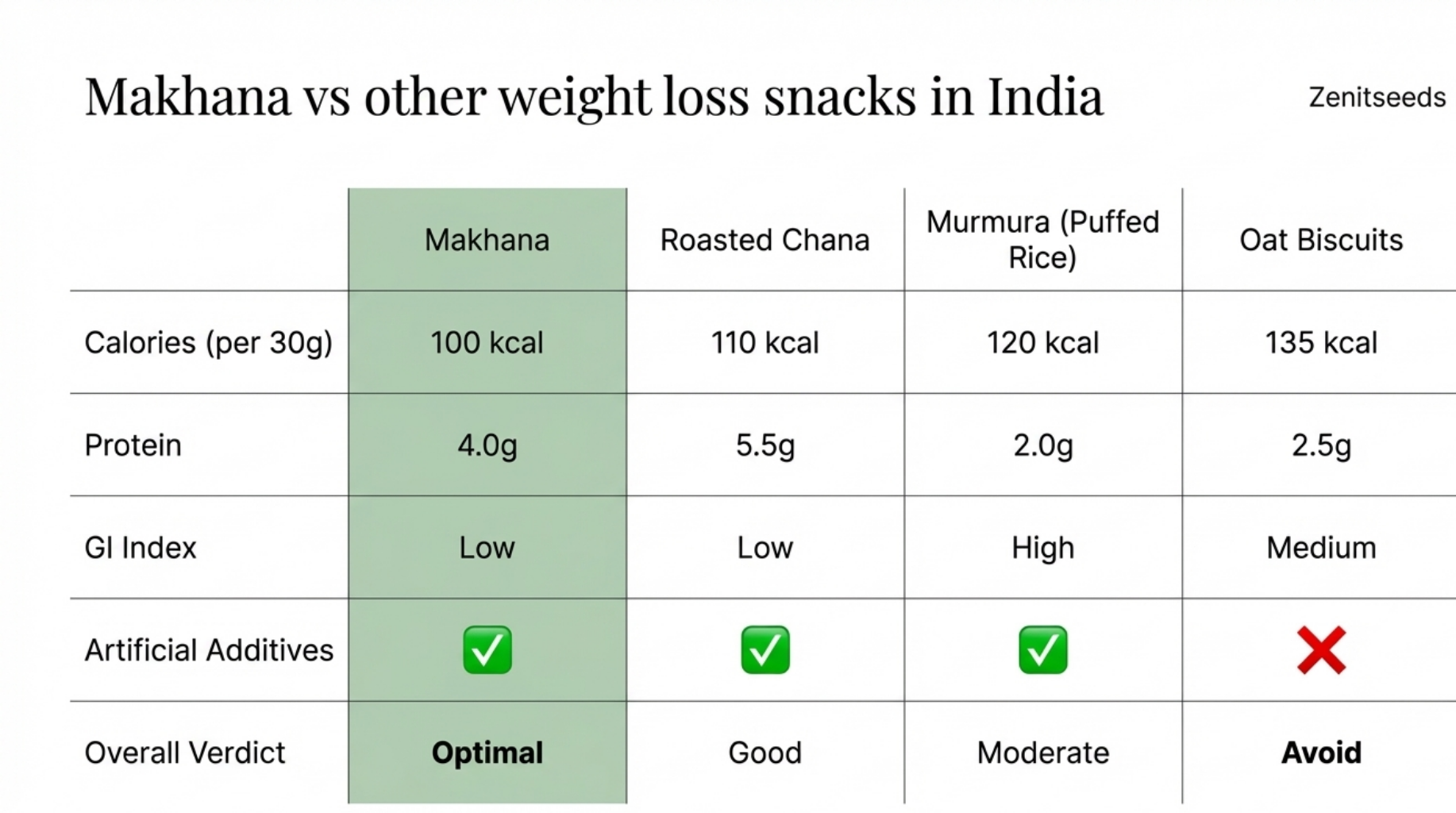
There are a few snacks that regularly come up in weight loss conversations in India. Here’s how makhana compares honestly.
Makhana vs roasted chana: Both are good. Chana is slightly higher in protein and fiber, but also denser in calories. Makhana is lighter, easier to digest, and more versatile in flavors. Both belong in a healthy snack rotation.
Makhana vs murmura (puffed rice): Plain murmura is low calorie but has almost no protein and a higher glycemic index. It fills you up quickly but doesn’t keep you full. Makhana wins on satiety.
Makhana vs nuts: Nuts are excellent but calorie-dense. A 30g serving of almonds is around 170 calories. Good for healthy fats, but you need to be more careful with portions. Makhana lets you snack more generously within a calorie limit.
Makhana vs oat biscuits: Most commercially available “healthy” biscuits contain more sugar, refined flour, and additives than the label implies. Makhana’s ingredient list is far simpler and cleaner.
The honest conclusion is that makhana sits near the top of the list for weight loss snacks India has available — especially once you factor in taste, convenience, and versatility.
The Zenitseeds Advantage for Weight-Conscious Snackers
Not all makhana is made equal, and this matters especially for weight loss.
Some brands coat their makhana in excess oil to make it taste richer. Some use salt-heavy seasoning to create an addictive quality that keeps you eating past your intended portion. Some use hollow or lower-grade seeds that absorb more oil during roasting.
At Zenitseeds, we start with Grade A lotus seeds from Bihar — dense, full seeds that roast cleanly and hold their structure. We dry roast first and use only a light spray of cold-pressed oil for seasoning. The result is a makhana that genuinely has the nutritional profile it promises, not one padded by poor-quality fat.
Our plain makhana is the purest choice for those actively managing their weight. Our flavored range adds seasoning without significantly changing the calorie or fat profile — because the seasoning is genuinely light, not a coating. For snackers who need flavor to stay on track, this matters a lot. Deprivation doesn’t work. Delicious and healthy does.
[Internal link suggestion: Shop Zenitseeds plain and flavored makhana — link to product page]
Portion Control Cheat Sheet
Keep this simple reference in mind:
- One serving: 25 to 30g (a cupped handful)
- Calories per serving: ~100 to 120 kcal
- Protein per serving: ~3.5 to 4g
- Recommended daily portions for weight loss: 1 to 2 servings
- Best times: mid-morning or mid-afternoon hunger windows
- Best pairing: green tea, black coffee, or a small handful of walnuts
Frequently Asked Questions
Q: Can I eat makhana every day while trying to lose weight? Yes. One to two servings of makhana per day is perfectly compatible with most weight loss plans. It’s low in calories, reasonably high in protein, and far better than most alternatives you’d reach for at the same moment.
Q: Does flavored makhana still work for weight loss? Yes, as long as the seasoning is clean and not oil-heavy. Zenitseeds flavored makhana adds around 10 to 15 calories per serving compared to plain, which is negligible. If flavor is what keeps you reaching for makhana instead of chips, then flavored makhana absolutely supports your goals.
Q: How many calories does makhana have per 100g? Roughly 325 to 350 calories per 100g. The key is that most people eat a 25 to 30g portion, not 100g, making the per-serving calorie count very manageable at around 100 kcal.
Q: Is makhana better than popcorn for weight loss? Plain air-popped popcorn and plain makhana are similarly positioned — both are low calorie and whole food snacks. Makhana has more protein and calcium. Popcorn has more fiber per serving. Both are good choices. Makhana wins on mineral content and versatility.
Q: Can makhana help reduce belly fat specifically? No single food reduces fat from a specific area — that’s not how fat loss works. But makhana supports overall fat loss by helping you manage total calorie intake, stabilize blood sugar, and avoid impulsive high-calorie snacking. Over time, that’s exactly what shifts body composition.
Q: How should I store makhana to keep it fresh for snacking? Store in an airtight container at room temperature. Pre-portion your servings into small containers or zip pouches at the start of the week so you’re not measuring every time you want a snack.
Conclusion
Makhana for weight loss isn’t a trend or a gimmick. It’s practical, evidence-backed, and genuinely enjoyable to eat — which is exactly what any sustainable dietary change needs to be.
The goal isn’t to suffer through tasteless food until you hit a number on the scale. It’s to build daily habits that feel good enough to keep doing. Replacing your mid-day packet of chips with a bowl of Zenitseeds makhana is one of the smallest, lowest-effort changes you can make. Over time, small changes made consistently are what actually move the needle.
Snack smarter. Feel better. Stay consistent.