

Introduction
We live in the age of the snack attack. Chips at 4 pm. A handful of namkeen while watching something at night. A biscuit or two with chai that somehow becomes five. Sound familiar? Most of us snack every single day, and most of what we reach for is doing us more harm than good.
Here’s the thing though. Snacking isn’t the problem. What we snack on is.
That’s where plain makhana quietly steps in and changes everything. No fuss, no artificial flavours, no long ingredient list you need a degree to decode. Just clean, roasted lotus seeds with a light touch of natural seasoning. Simple as that.
Plain makhana benefits go far beyond what most people realise. It isn’t just a light snack — it’s genuinely one of the most nutritious things you can eat between meals. And once you understand what’s actually inside that little puffed seed, you’ll wonder why you weren’t eating it sooner.
At Zenitseeds, we believe that good food doesn’t need to be complicated. It just needs to be pure.
What Exactly Is Plain Makhana?
Makhana, also called fox nuts or lotus seeds, comes from the Euryale ferox plant, which grows in the wetlands of Bihar and other parts of eastern India. The seeds are harvested, sun-dried, and then roasted at high heat until they puff up into those familiar, light, crunchy bites.
Plain makhana is makhana in its most honest form. No heavy coatings, no artificial flavouring, no unnecessary oil. Just the seed, roasted well, with a touch of salt if anything at all.
It has been a part of Indian tradition for centuries. Used in fasting foods, temple offerings, and Ayurvedic diets. There’s a reason it’s held that place for so long
The Nutritional Profile of Plain Makhana

Before we get into the plain makhana benefits, let’s talk numbers. This is where things get genuinely impressive.
A 30-gram serving of plain makhana typically contains:
- Calories: Around 100-110 kcal
- Protein: 3.5 to 4 grams
- Carbohydrates: 19 to 20 grams (mostly complex carbs)
- Fat: Less than 0.5 grams
- Fibre: Approximately 1.5 grams
- Calcium: Around 60 mg
- Magnesium: A solid 67 mg
- Phosphorus: A good natural source
- Iron: Present in useful amounts
Compare that to a similar serving of potato chips — which clocks in at nearly 160 kcal, loaded with saturated fat and sodium — and the difference is stark.
Fox nuts nutrition is genuinely exceptional for a snack food. High in protein relative to calories. Rich in minerals your body actually needs. And almost entirely free from the stuff it doesn’t.
The Real Health Benefits of Plain Makhana
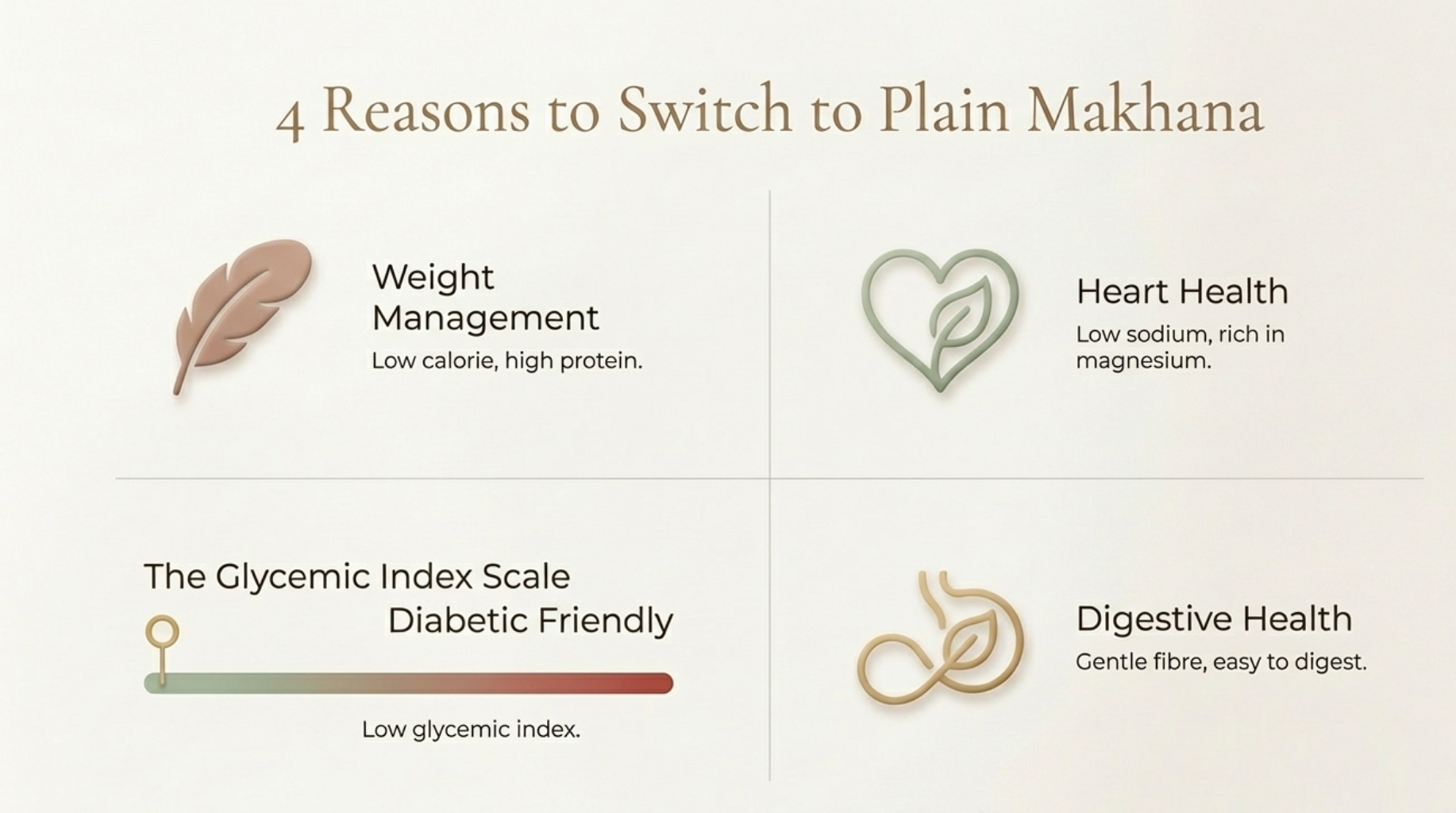
It Helps With Weight Management
One of the most talked-about plain makhana benefits is how well it fits into a weight loss routine. It’s low in calories but filling enough to take the edge off hunger. The combination of protein and fibre slows digestion, which means you stay satisfied longer.
It’s also a low glycemic index food, which means it doesn’t spike your blood sugar and leave you hungry again thirty minutes later. That alone makes it smarter than most low calorie snacks India has to offer.
It’s Good for Your Heart
Makhana is naturally low in sodium and almost entirely free of cholesterol. The magnesium content helps regulate blood pressure, and the anti-inflammatory properties of the seed support overall cardiovascular health. Eating clean, whole foods like plain makhana regularly is one of those small daily choices that adds up significantly over time.It Supports Digestion
The fibre in makhana, though not dramatically high, is steady and consistent. It promotes healthy gut movement and reduces bloating, especially compared to heavy fried snacks that often leave your stomach feeling sluggish. It’s gentle on the digestive system, making it a great option for those with sensitive stomachs.It’s Friendly for Diabetics
Because of its low glycemic index and slow carbohydrate release, plain makhana is considered safe and even beneficial for people managing blood sugar levels. It satisfies the need to snack without causing the energy crashes that refined carbohydrates are known for. Always worth checking with your doctor, of course, but makhana has long been a go-to recommendation in dietary management of diabetes in India.It’s Rich in Antioxidants
Fox nuts contain kaempferol, a natural flavonoid with antioxidant properties. Antioxidants help protect your cells from oxidative stress, which is linked to ageing and several chronic conditions. It’s not a miracle cure. But it is a meaningful, everyday source of something your body genuinely appreciates.
Why Plain Makhana Beats Fried Snacks Every Time
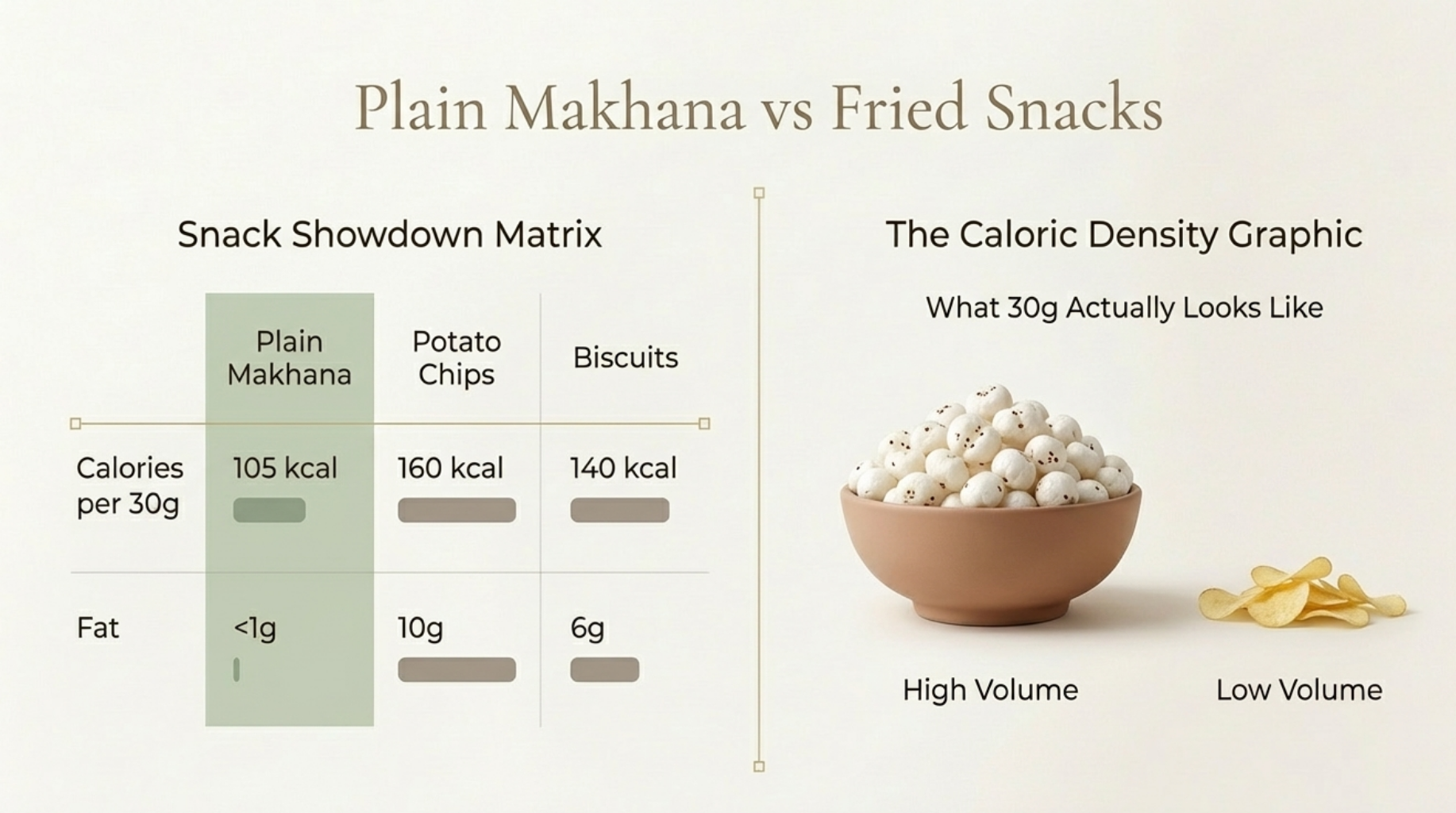
Let’s be real about what most of us are actually comparing makhana against. Chips. Biscuits. Fried namkeen. Puffed rice coated in masala and oil.
These snacks are designed to be addictive. High salt, high fat, and packed with flavour enhancers that keep you reaching for more. They taste great in the moment. But they leave you feeling heavy, bloated, and usually craving something else within the hour.
Plain makhana works differently. It satisfies the urge to crunch and snack without overloading your system. It’s one of the rare healthy makhana snacks that doesn’t feel like a compromise. You eat it and feel genuinely good afterward.
Some quick comparisons worth keeping in mind:
- Chips (30g): ~160 kcal, 10g fat, high sodium
- Biscuits (30g): ~140 kcal, 6g fat, refined sugar
- Plain Makhana (30g): ~105 kcal, less than 1g fat, natural minerals
The choice, when you see it like this, becomes pretty o
When and How to Eat Plain Makhana ?
The beauty of plain makhana is how versatile it is. There’s no one right way to eat it.
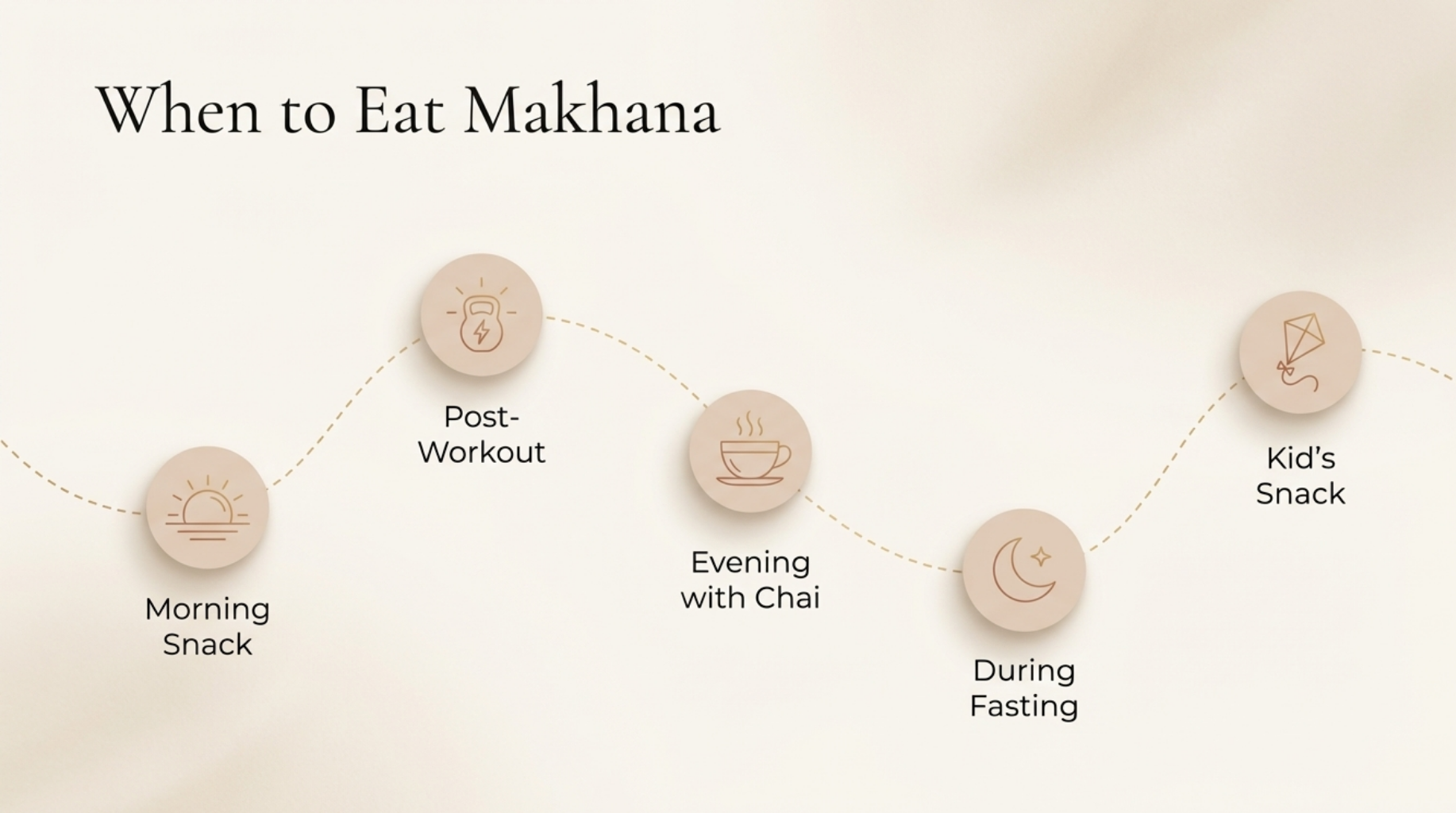
As a mid-morning snack between breakfast and lunch, a small handful keeps energy steady and stops you from overeating at your next meal.
As an evening snack with chai, it replaces the biscuit habit in a genuinely nutritious way. It pairs surprisingly well with masala chai.
Post-workout, when you need something light but protein-rich to start recovery without a heavy meal.
During fasting, plain makhana has been traditionally eaten during Navratri and other fasts. It’s filling, pure, and completely satvik.
For children, it’s one of the safest and cleanest snack options — no artificial colours, no preservatives, nothing to worry about.
A typical portion is around 25 to 30 grams, roughly a cupped handful. That’s enough to feel satisfied without overdoing the calories. Pair it with a handful of nuts or a cup of green tea and you have a genuinely premium, balanced snack moment.
Why Zenitseeds Plain Makhana Is Different ?
There are a lot of makhana brands out there now. The category has grown fast. And with that growth comes a lot of shortcuts — thin coatings to hide poor-quality seeds, excess oil to make them taste richer, artificial flavour enhancers passed off as natural.
At Zenitseeds, we don’t work that way.
Our plain makhana starts with sourcing. We work directly with farmers in the makhana-growing heartland of Bihar, where the lotus seed is cultivated with generational knowledge and genuine care. We select only Grade A seeds — uniform in size, full in texture, free from broken or hollow pieces.
The roasting is done clean. Cold-pressed oil, controlled heat, and just enough Himalayan pink salt to bring out the seed’s natural, nutty flavour. Nothing more is added because nothing more is needed.
Every batch goes through quality checks before it reaches you. Because we believe that what you eat between meals matters just as much as what you eat at them.
Plain makhana benefits are real. But only when the makhana itself is pure. That’s the Zenitseeds difference.
Frequently Asked Questions About Plain Makhana
Q: How many plain makhana can I eat in a day? A healthy portion is around 25 to 30 grams per serving, which is roughly a small bowl. Eating one or two servings a day is perfectly fine for most people and fits easily within a balanced diet.
Q: Is plain makhana good for weight loss? Yes. Its low calorie count, decent protein content, and low glycemic index make it one of the better low calorie snacks India has available. It’s filling without being heavy, which helps reduce overeating through the day.
Q: Can diabetics eat makhana? Makhana has a low glycemic index, which means it causes a slower, steadier rise in blood sugar compared to refined snacks. Most nutritionists consider it a suitable snack for diabetics, though individual dietary needs vary and consulting a doctor is always advisable.
Q: Is plain makhana better than roasted chana or almonds? All three are good snack choices. Makhana is lower in fat than almonds and lighter in calories than chana, making it a great everyday snack. Almonds have a higher fat content (healthy fats), so they’re more calorie-dense. The best choice depends on your goals.
Q: What makes Zenitseeds makhana different from other brands? We source Grade A lotus seeds directly from Bihar farmers, roast in cold-pressed oil, and use only Himalayan pink salt. No artificial additives, no fillers, no shortcuts. Just clean, pure makhana.
Q: Can kids eat plain makhana? Absolutely. It’s one of the safest snacks for children. No artificial colours, no preservatives, and a naturally mild flavour that kids tend to enjoy. Many parents use it as a healthier alternative to chips or puffed snacks.
Conclusion
Snacking is a part of life. It always has been. The question is just whether what you snack on works for you or against you.
Plain makhana benefits are real, meaningful, and backed by both nutrition science and centuries of traditional use. It’s light, clean, nutritious, and genuinely enjoyable to eat. Not as a compromise. Not as a diet food you tolerate. But as a snack you actually want.
At Zenitseeds, we’ve made it our job to give you makhana that’s as pure as it gets. Grade A seeds, clean roasting, honest ingredients.
Ready to make the switch? Explore our Plain Salted Makhana and taste the Zenitseeds difference for yourself.