
Introduction
Let’s be honest. Nobody reaches for a snack because they want to be responsible. You reach for a snack because something smells good, looks good, or because 4 pm hit and your stomach started making decisions for you.
Flavor is not a guilty pleasure. It’s just pleasure. And the idea that healthy food has to be bland is one of the most persistent myths in snacking culture.
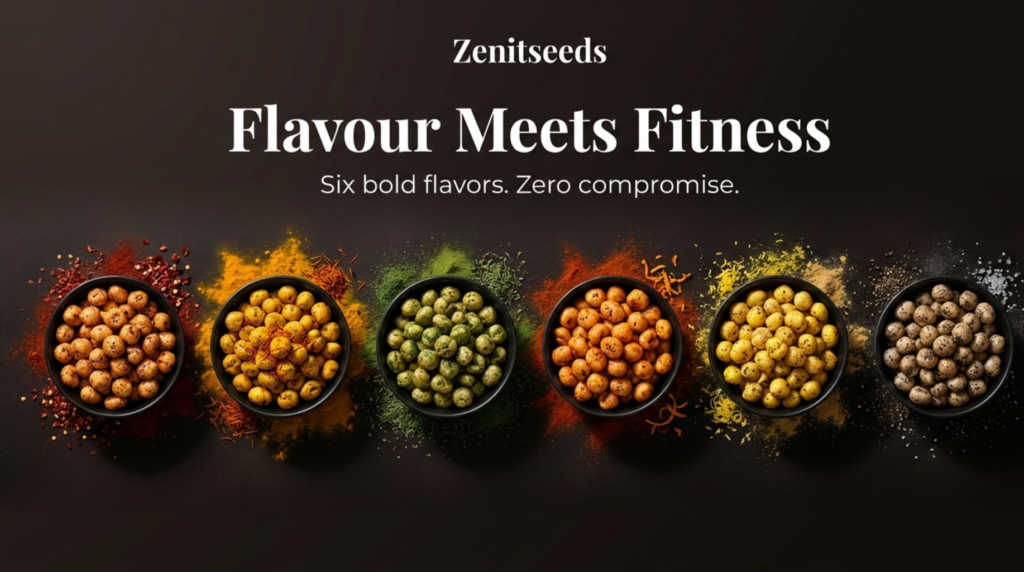
Flavored makhana is here to quietly dismantle that myth. Bold taste, clean ingredients, and a nutritional profile that holds up to scrutiny. That’s not a compromise. That’s just a smarter snack.
At Zenitseeds, we built our entire flavored range around one question: why should eating well mean eating boring? The answer, as it turns out, is that it doesn’t have to.
[Internal link suggestion: Explore all Zenitseeds makhana flavors — link to product collection page]
Why We Crave Flavor — and Why That’s Completely Normal
Flavor cravings are not a weakness. They’re biology.
Your brain is wired to seek variety. Salt triggers dopamine. Spice activates nerve endings and creates a rush. Tangy flavors stimulate saliva production and kick your appetite into gear. This is why a plain rice cake feels like punishment, and a bag of masala chips feels like a party.
The problem with most flavored snacks isn’t the flavor. It’s everything they use to deliver it. Artificial enhancers, hydrogenated oils, excess sodium, colors that have no business being in food. The flavor is engineered to keep you eating, not to nourish you.
Healthy flavored snacks work differently. The seasoning is real, the process is clean, and the base ingredient — in this case, roasted makhana — is already doing the nutritional heavy lifting. The flavor enhances the experience without compromising what matters.
Meet the Zenitseeds Flavored Makhana Range
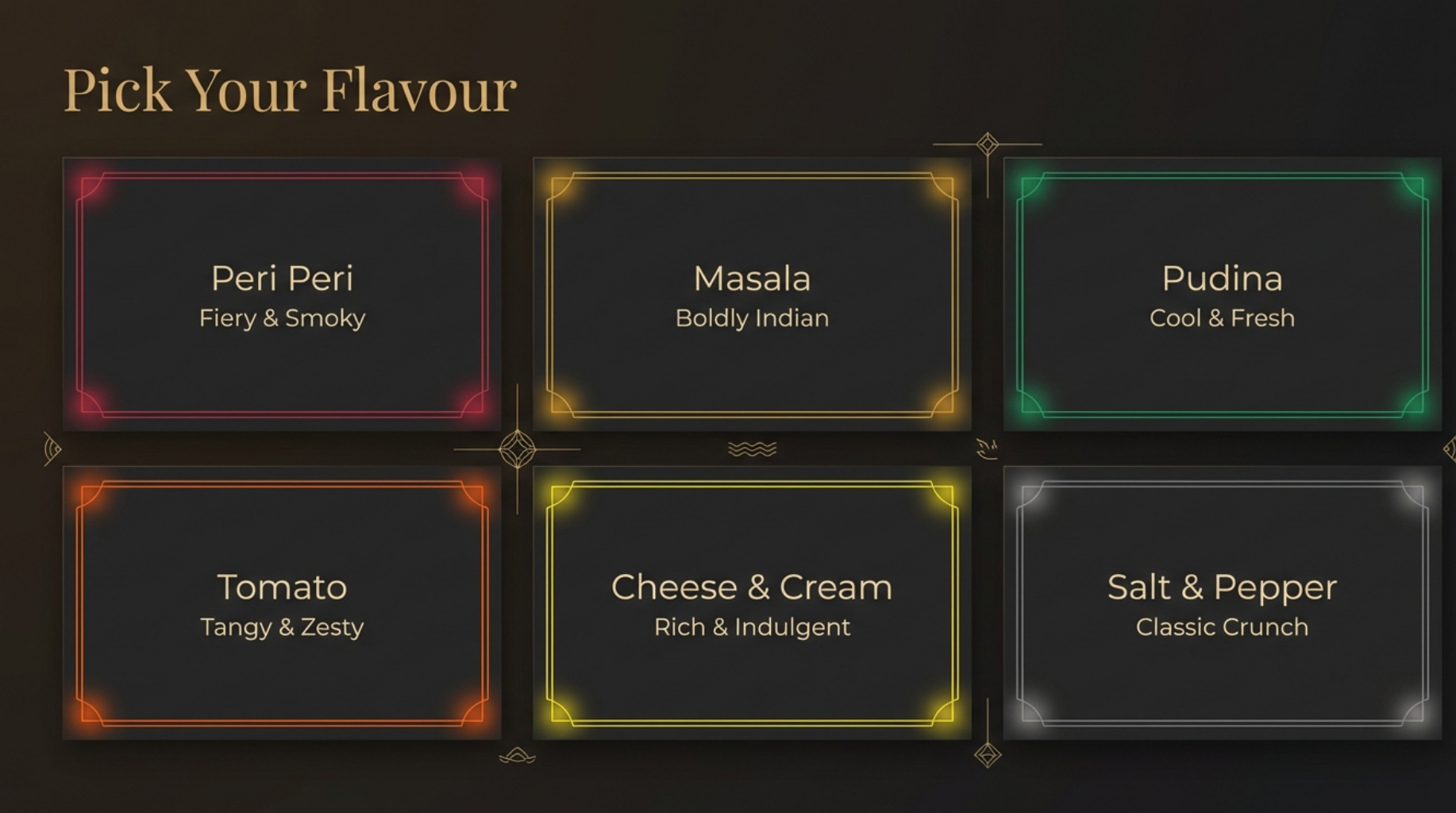
Six bold flavors, each one crafted to deliver a genuinely satisfying snack experience. Here’s what makes each one worth reaching for.
Peri Peri Makhana
For the spice lovers. Smoky, garlicky, with a citrus edge that keeps it bright. Made with a real peri peri spice blend and smoked paprika — no artificial heat, just layered warmth that builds with every bite. High in antioxidants and naturally metabolism-boosting thanks to capsaicin.
Cheese and Cream Makhana
The indulgent one that doesn’t ask you to feel guilty afterward. Velvety cheese powder and a touch of cream seasoning coat each lotus seed in a smooth, savoury richness. Baked, not fried. A fraction of the fat of cheese-flavored chips, and a solid hit of protein underneath.
Masala Makhana
Our love letter to Indian spice. Cumin, coriander, chaat masala, dry mango powder, and a kiss of Kashmiri chilli come together in a blend that’s deeply familiar and completely satisfying. The kind of snack you reach for when you want something that tastes like home.
Tomato Flavored Makhana
Bright, tangy, and just a little smoky. Made with real tomato powder and dried herbs, this one has a cheerful, crowd-pleasing quality that makes it the go-to for sharing. Great for kids. Great for literally anyone who enjoys tomatoes, which is most people.
Pudina (Mint) Makhana
Cool, aromatic, and genuinely refreshing. Dried mint leaves and fennel powder create a palate-cleansing flavor that’s different from anything else in the snack aisle. Light, digestive, and perfect after a meal or as a summer snack.
Salt and Pepper Makhana
The classic that earns its place by being exactly what it promises. Sharp, clean, simple. A reminder that sometimes the best flavor is just the best version of the basics.
[Internal link suggestion: Read about our sourcing and quality standards — link to About page]
Flavored Makhana vs Chips and Namkeen — A Real Comparison
Here’s where the numbers do the talking.
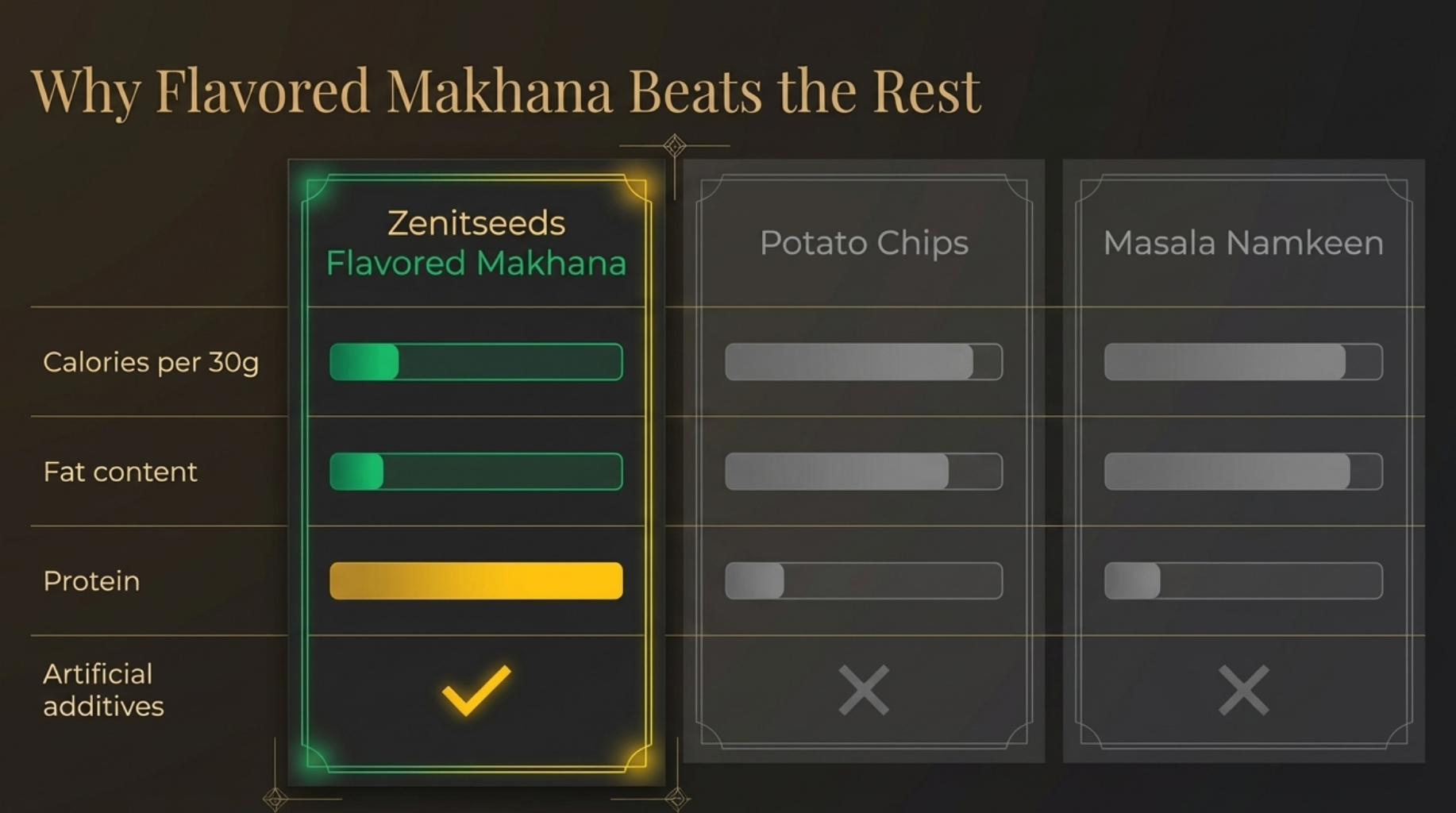
A standard 30g serving comparison:
- Potato chips: Around 160 kcal, 10g fat, high sodium, artificial flavour enhancers, zero protein worth mentioning
- Masala namkeen: Around 140 kcal, 8g fat, often fried in refined oils, may contain artificial colours
- Zenitseeds flavored makhana: Around 110 to 120 kcal, under 2g fat, natural spice blends, 3 to 4g protein, no artificial additives
The calorie difference alone adds up fast. Two packets of chips a day is nearly 300 extra calories of almost zero nutritional value. Two servings of flavored makhana gives you energy, protein, magnesium, and calcium — and keeps you fuller, longer.
The fat profile is the real story though. Chips are fried in refined oil at high temperatures, creating oxidized fats that your body handles poorly. Makhana is dry roasted, then lightly tossed in cold-pressed oil. The fat is minimal and clean.
And then there’s the ingredient list. Flip a bag of masala chips over and count the numbers — the E-numbers, the flavor enhancers, the stabilizers. A Zenitseeds pack reads differently. You’ll recognize everything on it.
How Flavored Makhana Can Still Be Genuinely Healthy
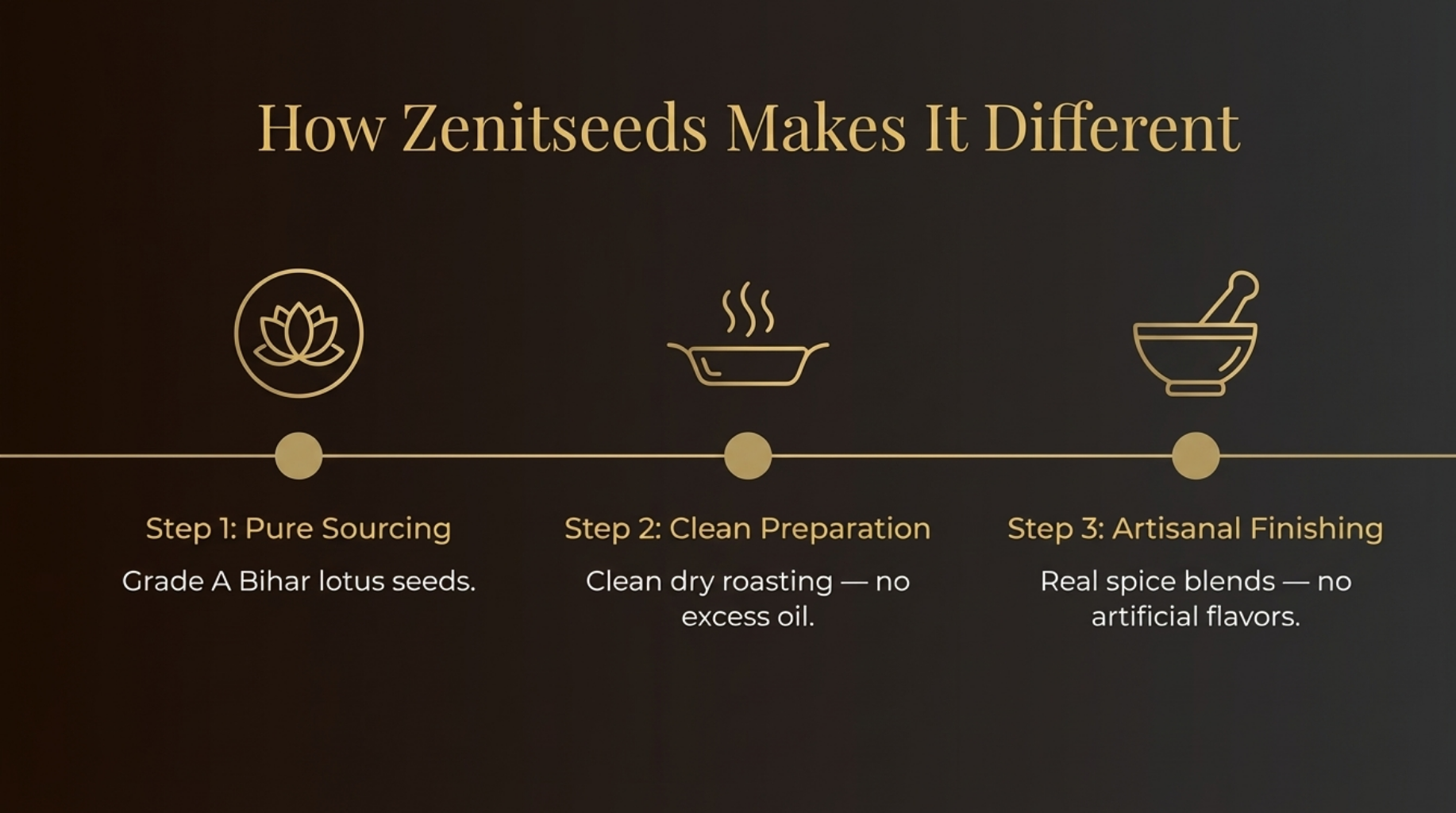
This is the question worth answering properly, because not all flavored makhana is created equal.
The health credentials of flavored makhana depend entirely on how it’s made. The wrong approach — coating in excess oil, using artificial flavor powders, loading up on salt — can turn a healthy base ingredient into something not much better than namkeen.
The right approach looks like this:
- Start with Grade A lotus seeds. The base matters enormously. Hollow seeds, broken seeds, or low-quality makhana absorb more oil and have a shorter shelf life.
- Dry roast first, season after. Roasting without oil creates the crunch. Seasoning afterward with a light spray of cold-pressed oil means the spices stick without drowning the seed.
- Use real spice blends. Real cumin smells different from artificial cumin flavoring. Real tomato powder tastes different from tomato flavoring concentrate. These aren’t interchangeable, and the body processes them differently.
- Control the sodium. Flavored doesn’t have to mean salt-heavy. Good seasoning relies on depth of flavor, not just salt intensity.
This is the framework behind every Zenitseeds flavor. Balanced seasoning, not oily texture, and a commitment to ingredients you can actually read.
Flavored Makhana and the Modern Snacking Lifestyle
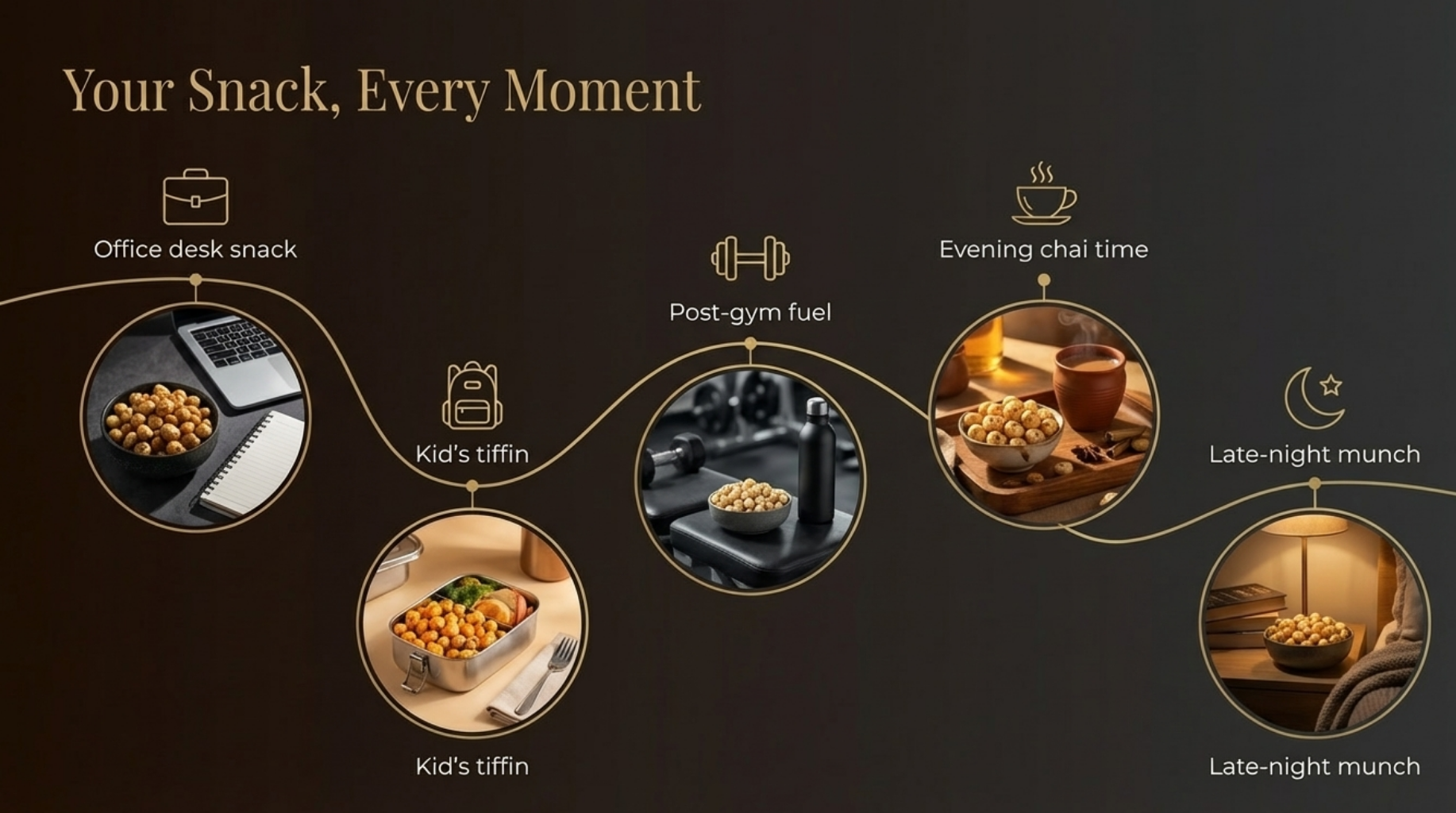
The way Indians snack has shifted meaningfully in the last decade. Urban professionals are reading labels. Fitness communities are scrutinizing macros. Parents are thinking harder about what goes into their kids’ tiffin boxes. The premium grocery segment is growing because people are willing to pay more for better quality.
But there’s a tension here that most health brands get wrong. They market their products as sacrifice. “It’s not as good as chips, but it’s better for you.” That framing almost always loses.
Flavored makhana doesn’t need that framing. It wins on taste, not just virtue. That’s a meaningful difference.
For the gym-goer, it’s a pre-workout or post-workout snack with protein and low fat. For the office worker, it’s an afternoon bite that doesn’t cause a 3 pm energy crash. For the parent, it’s a school snack that doesn’t have ingredients they’d rather not explain. For the late-night snacker, it’s the choice that doesn’t keep you lying awake wondering if you made a mistake.
Roasted makhana flavors fit neatly into a modern, health-conscious lifestyle without requiring that lifestyle to be joyless.
[Internal link suggestion: See our guide to healthy snacking habits — link to related blog post]
Why Zenitseeds Flavored Makhana Is Different
The flavored makhana category has grown fast. That growth brings shortcuts. Brands cutting costs on seed quality, compensating with heavy seasoning to mask the difference. Artificially bright colors suggesting flavors that barely register in taste.
Zenitseeds takes a different position.
We source only Grade A lotus seeds, directly from Bihar farmers with generational expertise in makhana cultivation. Every seed is checked for size, density, and quality before processing. The hollow ones, the broken ones — they don’t make the cut.
Our seasoning blends are built in-house, using real spices, real herbs, and real tomato or cheese powders — not artificial flavor concentrates. Each blend goes through taste testing across multiple batches to make sure the flavor profile is consistent and genuinely enjoyable.
The roasting is done clean. Cold-pressed oil, controlled temperature, precise timing. The result is a makhana that’s light and crispy, not heavy or oily. When you pour it into a bowl, there’s no residue on your fingers.
That’s not marketing language. That’s the difference that shows up in the first bite.
Frequently Asked Questions About Flavored Makhana
Q: Is flavored makhana as healthy as plain makhana? It’s very close. Flavored makhana has a slightly higher calorie and sodium count due to the seasoning, but the difference is small. The base ingredient retains all its nutritional benefits — protein, calcium, magnesium — and as long as the seasoning uses real ingredients, the added health value of certain spices (like cumin for digestion, or chilli for metabolism) can actually make it more beneficial in some ways.
Q: Is flavored makhana safe for kids? Yes, for most flavors. Milder options like Tomato, Pudina, and Cheese and Cream are very well-suited for children. Peri Peri is spicier and better for older kids and adults. Always check the spice level before giving to young children.
Q: How is Zenitseeds makhana different from other flavored brands? We use Grade A lotus seeds, real spice blends with no artificial flavor enhancers, cold-pressed oil for roasting, and consistent quality-check processes across every batch. The seasoning is balanced — present, but not overpowering.
Q: Can I eat flavored makhana on a diet? Absolutely. At 110 to 120 kcal per 30g serving and under 2g fat, flavored makhana fits comfortably within most calorie-controlled diets. It’s far more nutritious than most other snacks in the same calorie range.
Q: Which Zenitseeds flavor should I try first? If you love bold Indian flavors, start with Masala. If you prefer something globally inspired, go with Peri Peri. For something light and easy to love, Tomato or Pudina is a great entry point. Cheese and Cream tends to win over anyone who thinks healthy snacking sounds boring.
Q: How should I store flavored makhana to keep it fresh? Store in an airtight container at room temperature, away from moisture. Properly stored, Zenitseeds makhana retains its crunch for the full shelf life printed on the pack.
Conclusion
Flavor is not the enemy of health. The enemy of health is low-quality ingredients, artificial additives, and snacks engineered to exploit your cravings without giving your body anything in return.
Flavored makhana, done right, is none of those things. It’s a snack that respects your taste buds and your health at the same time. It’s the answer to every moment you’ve reached for a bag of chips knowing full well you’d feel worse afterward.
Zenitseeds built this range for people who refuse to settle. For people who want their snack to taste like something — and also to actually mean something.
The flavors are real. The quality is serious. And the choice is yours.
[Internal link suggestion: Shop the full Zenitseeds flavored makhana range — link to product page]